Fun Works

It started with one river guide standing at the front of our group, explaining the schedule of our white water rafting outing, but it soon comprised approximately eight more river guides in a comedy skit meant to encourage light-hearted fun…and water rafting tips, of course. This high-spirited group of young people continued their slap-stick, SNL-worthy comedy routine throughout a 45 minute bus ride to the drop off site, lunch break, and bus ride back. When you come across a workplace with that level of jovial interaction, you take notice.

Regardless of the fact that it’s an outdoor recreation business, the beauty of their comfort and reliance on one another can’t be underestimated. They came together when providing lunch, jumped in to aid any guide needing assistance, and took equal responsibility for the care and experience of the entire group. I want to work there!

Okay, maybe I’m not qualified to work there, but I’d love to work in an environment that promotes a positive team-centered approach–with at least an occasional slice of humor. Laughing at work is underrated. Seriously.

Every job–both paid and volunteer–could benefit from a lesson from the young people at Edge of the World in Banner Elk, North Carolina. Take your job seriously (people can die on the river); just don’t take yourself too seriously. We can do a job exceedingly well and enjoy the heck out of it.

Their fun was infectious; the white water rafting refreshing. Go see them, and tell Gibb, Garrett, Sara, and the rest of the group I said hello:)

Quote of the Day:

“Never ever underestimate the importance of having fun.” Randy Pausch

Sunshine On My Shoulders Makes Me Happy

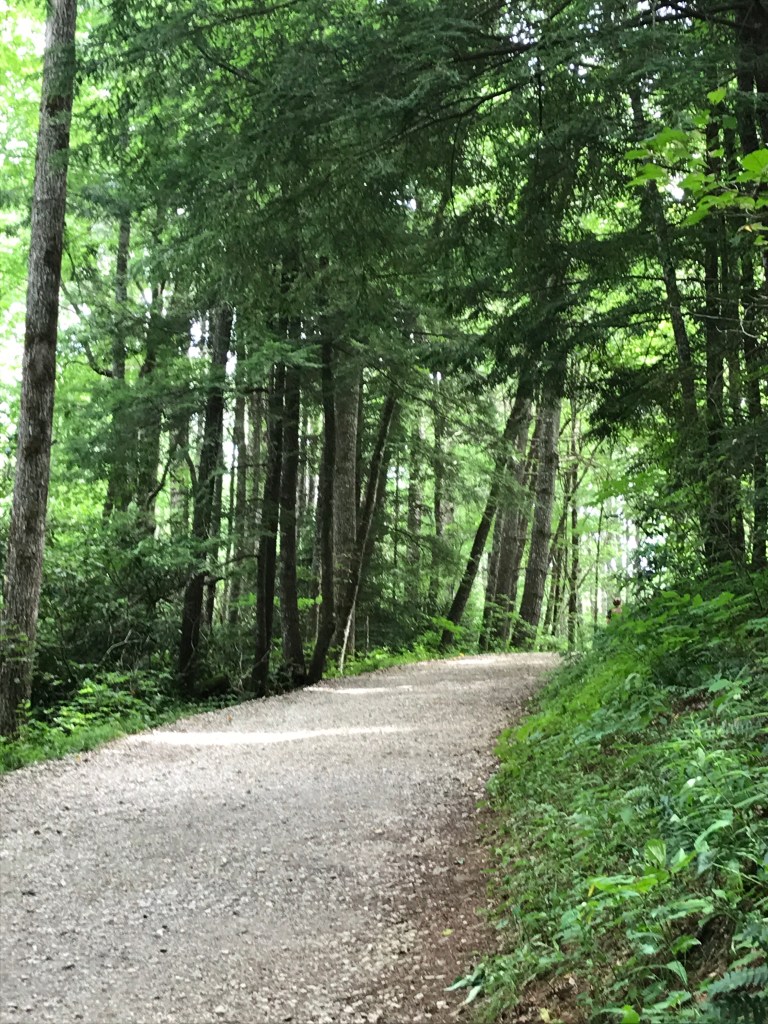
John Denver’s “Sunshine” played on a CD I was listening to–yes, I still listen to CDs–and in my mind, I was immediately transported to the streams of the Blue Ridge Mountains, where our family spent countless camping trips, jumping from rock to rock down its cold, clear, wondrous water. Denver somehow knew exactly how I felt in the mountains; maybe he felt the same way.

It always takes me by surprise. I hear a song from a faraway time, and the immediacy of my transportation to the moment when the song became a part of my life both excites and saddens me. Reliving memorable moments, at least the happy ones, bring a quiet joy, an almost stillness, yet the same repose reminds me of their fleeting glances. These times conjure my youth, an experience, or the company of someone who is no longer alive. I think it’s the realism created in my mind that stops me in my tracks; I can almost imagine still being there.

Music has such a hold throughout our lives. In grade school, the Beatles, Smoky Robinson, Simon & Garfunkel, Tammy Wynette, and, believe it or not, Don Ho were favorites. By the eighth grade, Pink Floyd, Blondie, Michael Jackson, and Queen were making my list, and the musical journey continues until today. Speaking of Journey, Steve will always be a favorite❤️

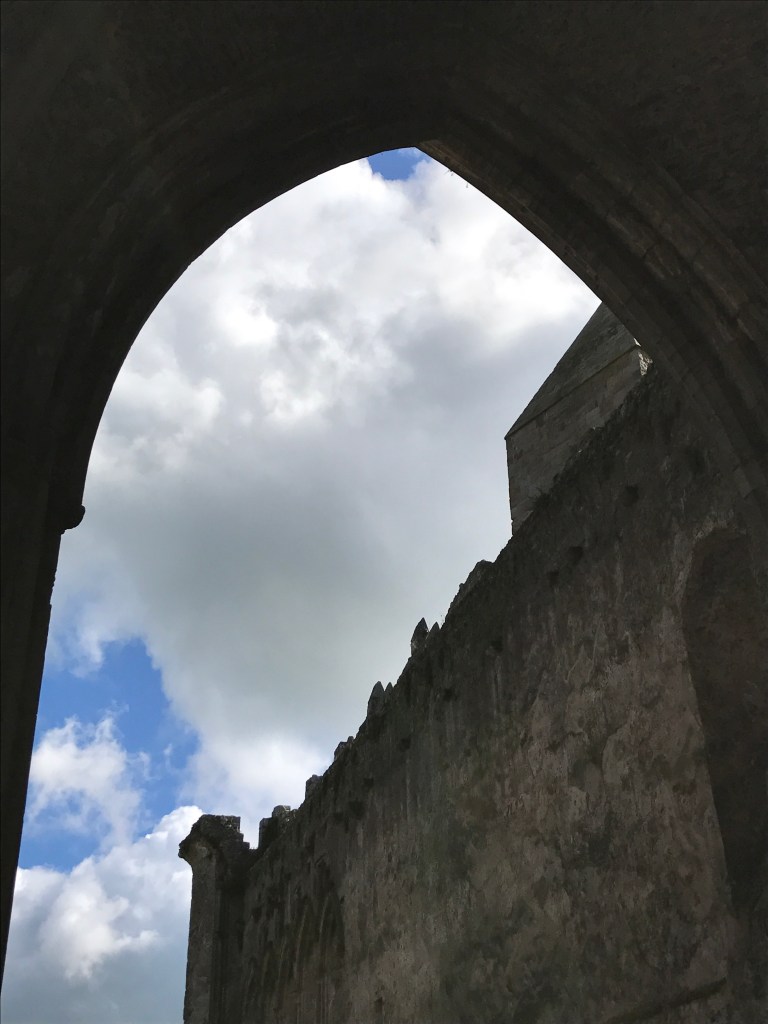
It’s the music that takes us back to occasions that we’d be happy to visit from time to time, or songs that summon unbidden emotions that leave us transfixed. “A Bridge Over Troubled Water,” while beautiful, forever recollects a drowning and near drowning at a school outing. “Both Sides Now,” by Joni Mitchell, makes me cry. “I Was Made For Loving You,” by Kiss, brings to mind my thirteen-year-old exposure to a dance while camping, and the realization that boys were kind of interesting. “Thunder” will endlessly call forth my and Sam’s drive through Ireland. Going through music from an early age to now presents moments of elation, insecurity, uncertainty, and, of course, joy. It’s a gift, really; the ability to travel back in time by listening to a song.

Still, the alternate reality created by hearing an old song will forever test my senses. I completely understand how those much older than me reminisce through their music; they have more practice and material. So, if you ever find me staring into space while listening to an older song, I’m probably in a good place.

Quote of the Day:

“I see my life in terms of music.” Albert Einstein

Happy Father’s Day

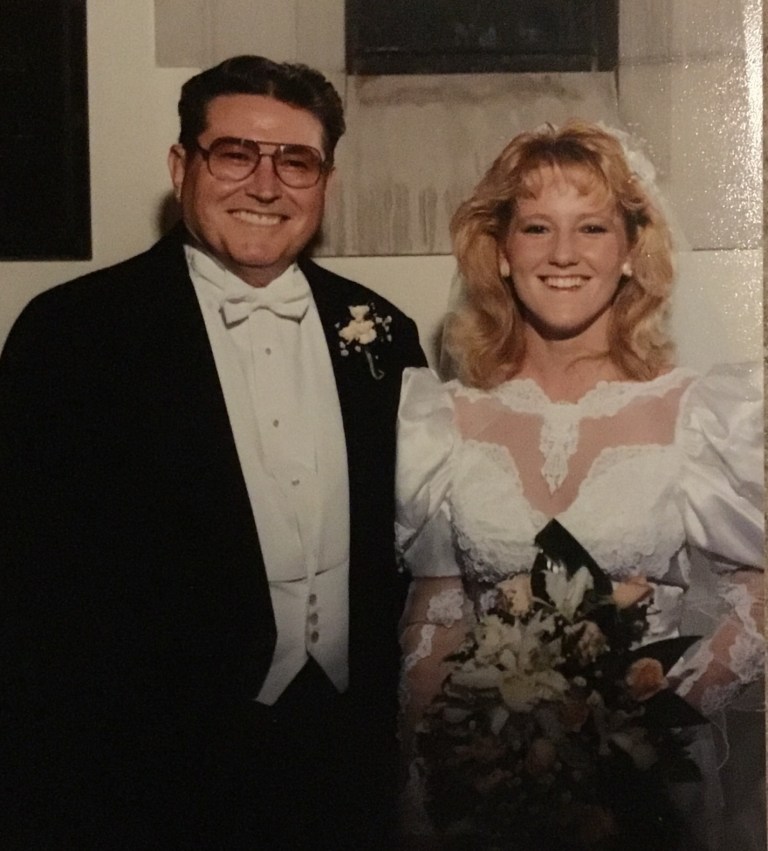
It’s been almost 13 years since Dad passed away, although, at times, it seems like he was just here. We were on the right side of lucky, with a father who did everything he could fathom to do right by us.

Isn’t that really what it’s all about? Fathers come with extremely different ideas of creating the optimal environment for love and growth, but it’s the willingness to be your best for the family. We’re not talking perfect–because that’s not happening for anyone, but someone who looks out for our interests.

Celebrate those fathers who are giving it their top effort; you don’t know how long you’ll have them. Here’s some of what I miss from mine:

  • An easy laugh
  • Smooth dancing
  • Amazing waffles
  • Throwing his Elvis-styled hair back
  • Fixing the car (and anything else that is mechanical or electrical)
  • Camping
  • Watching him enjoy jellied oranges or Fig Newtons
  • Riding a motorcycle
  • Sitting with us at church
  • Saving the heel of Hawaiian bread
  • Playing pool
  • Working on a project together
  • Asking his opinion
  • Pretty much, just knowing he’s there.

Happy Father’s Day, Dad. We miss you.

Quote of the Day:

“My father gave me the greatest gift anyone could give another person: He believed in me.” Jim Valvano

Let them Play—and be Incredible

I’ve read the reports criticizing our U.S. women’s soccer team’s win over Thailand with sadness and incredulity. I also watched the game. What I witnessed was a team playing on the national stage in a professional manner, playing to win and celebrating each member’s success.

While I understand the draw in being the one who chastises the team for scoring too many goals, I also realize that we’re not watching our eight-year-olds compete; we’re watching professional athletes compete. What is considered too much of a lead in professional sports, especially in a tournament where goals count? I’ve seen my share of professional football and basketball games with massive scoring inequities–and those extra points didn’t even matter.

If you’ve ever played a sport and been on the receiving end of a public spanking, nothing will change the embarrassment other than redemption in the next game. The worst feeling–other than the humiliation of losing spectacularly–is being toyed with by the other team. If the U.S. team chose to play keep away from Thailand rather than playing their game, Thailand would be guaranteed mortification on a world scale. The respectful action is to play the game.

The matter of celebration (too excited, showy, what number goal is appropriate, etc.) remains a mystery as well. Can you even imagine what it would be like to score a goal in the World Cup? I’m not even in the same oxygen circle as these women, and I can visualize it to some extent. Pugh is playing her first World Cup; should she keep her excitement to herself even though it’s her first goal? Even if it was her tenth goal, should she play it cool? Is that what we celebrate? The athletes who are able to make it seem like it’s no big deal, or the ones who are so utterly beside themselves that the have to dance, or scream, or slide on their knees? Would the Thai players be more impressed if it didn’t seem that hard to score on them?

Lastly, why are we tearing down our own team? They’ve played one amazing game, and we’ve got people saying they’ve ruined the spirit of the game? 1. Give me a break! We have a talented group who came into the Cup and won sensationally, and you think they’ve ruined the spirit of competition? 2. Who are you rooting for, anyway? Don’t put a damper on their win because they won by a landslide. There’s nothing wrong with being sympathetic for the losing team, but it doesn’t require admonishing the winning team. 3. For crying out loud! Cheer our women on! Support them! Let them know that they were and are glorious!

Our women’s team plays Chile on Sunday at 12:00 EDT. Grab some snacks, tune in, and cheer on some of the most remarkable athletes our country has to offer. That’s it–just be phenomenal fans.

Quote of the Day:

“Be thankful for quality competitors who push you to your limit.” Michael Josephson

Forgiveness

A forgiveness researcher, Everett Worthington, proclaims the importance of forgiveness in healing our hearts, that “it is unfortunate that someone caused us harm but holding on to the negative feelings towards that person is only hurting ourselves.” (“Forgiveness and your health: What science says about the benefits”, CNN). Worthington should know. His mother was killed by a young man who burglarized her home and bludgeoned her to death with a crowbar, as well as violating her unspeakably. His first reaction pictured an equally violent death for the offender, but after some hours, he asked himself, “Whose heart is darker?”

While Worthington had much more to pardon than most of us, the fact that he could forgive the man who forever altered his family’s life remains at least a call of admonishment for the minutiae we sometimes cling to in our own personal grievances. The relativity of our wrongs compared to Worthington’s appears inconsequential, yet they’re real to us, nonetheless.

According to the article, harboring anger and hostility–the twins of an unforgiving heart–were linked to serious health issues, for instance coronary heart disease. Holding on to anger, a stress response, leads to a wear and tear on our bodies. Our own resentment enables our own undoing; we make ourselves physically sick.

Of course, we all know the simplest result of being unforgiving, unease. All is not well in our world. We tend to dwell on why we have every right to be angry, seeking validation for our views. Yet, the affirmation we seek can only be obtained within ourselves. No one–unless they have suffered the exact same wrong–will be able to truly perceive our injury. The realization is our remedy lies in our acceptance of the wrong and the gift to both ourselves–and the other person(s)–to move past the transgression. Not always a simple thing, I know. I try to keep in mind the times when I am the one who really needed the forgiveness. If we can forgive, though, we can become content again.

The next step, after forgiving–especially in small matters–is forgetting. If forgiveness is troublesome, the act of forgetting can seem unachievable, short of a poor memory. How do we forget the insensitivity, the cruelty, the passivity? It all depends on the level of injury. In Worthington’s case, I wouldn’t presume that forgetting is an option. Actually, even in less damaging situations, forgetting can sometimes be a moot endeavor. The truth is “to forgive and forget” may not be possible; however, forgiving is possible.

No longer holding on to our anger prevails as paramount to our happiness, so let’s let it go! At least, we can work on it…for not only our own well-being but those with whom we’re closest.

Quote of the Day:

“Hanging on to anger is like drinking poison and waiting for the other person to die.” Buddha

Do You Want to Dance?

Those were words that I longed to hear–at the school dance, at a club, at a wedding–that is, until I realized I didn’t mind dancing by myself (and everyone else out on the dance floor). I’ve always loved dance, from ballet to swing to hip-hop. While I prefer to be the one dancing, watching others dance is equally satisfying–So You Think You Can Dance and World of Dance amaze me.

Both my mother and father liked to dance, so I get my leanings honestly. We didn’t take dance lessons, at least I didn’t, but it always “called my name.” The goal, in every dancing opportunity, centers on staying on the floor as long as possible, barring an uninspiring song. A truly perfect evening, in my younger years, involved leaving a club covered in sweat from endless dancing.

To describe dancing would be similar to how flying has been described to me, an effortless freedom of melding your mind and body–in this case, to music. It’s, at times, uncontrollable, given the right music; there are some songs that just require movement on my part. To waste the experience would seem shameful. Most, I’m hoping, have experienced a torn-off-the shoulder-sweatshirt-Flashdance moment, surely! God, I loved the choreography in that movie.

Unfortunately, after you reach a certain age, dancing at the club becomes a practice in extreme awkwardness😳. I’m totally down with living my truth and all, but when the surrounding crowd is the age of you’re own children, it might be time to take a step back. So, after a time, we older sorts are relegated to home dancing–at least, so I thought!

While I had heard of Zumba, emerging under my radar were WERQ classes, a hip-hop type class employing current moves and music. The beauty of WERQ lies in the lack of judgment and inspiring content. Everyone genuinely concentrates on the instructor(s), learning the sometimes quick choreography–and more jiggling than anyone’s used to–and having an amazing time. All ages and genders are represented, by the way, so no excuses.

If you love–or think you might like–to dance, check out a local WERQ or Zumba class. You’ll get a good workout, have fun, and probably make some new friends, and, on the plus side, no one will wonder who let you in:)

Quote of the Day:

“Nobody cares if you can’t dance well. Just get up and dance. Great dancers are great because of their passion.” Martha Graham

Who Are We Anyway?

The BBC reported that two women, aged 28 and 29, were attacked on May 30 on a London bus by four homophobic, male teenagers. The two women, their faces bloodied, were assaulted because they refused to kiss one another. The “kids” were between the ages of 15 and 18 and have since been arrested; the Det Supt Andy Cox described the crime as “disgusting.” Reported homophobic hate crimes across London have increased from 1,488 in 2014 to 2,308 in 2018, according to London’s Met Police’s crime dashboard.

What about the United States? In 2016, the New York Times reported that the LGBT community was twice as likely to be targets for hate crimes than any other minority group. Any. Other. Minority. Group. In 2017, anti-LGBTQ hate crimes rose 3 percent, according to the FBI. In plain English, our America must turn its own attention to the problem.

With any increase–particularly with personal assault–there are correlating factors. Why are there increases in homophobic hate crimes? Who is encouraging these individuals? I believe–and history agrees–when groups are minimized, an allowance is made for actions against them. When their rights are taken away, they are no longer “seen” as equal by those looking for excuses to be prejudiced, angry, self-righteous, and/or criminal.

According to the ACLU, in regards to LGBTQ, “a majority of states don’t have explicit laws prohibiting discrimination in employment, housing, and public accommodations. There are restrictions on identification documents, health care, adoption and foster care, marriage, schools and student organizations,” to name a few. If we allow our communities, states, and country to diminish the privileges of any group, we are committing crimes against humanity, “persecution against any identifiable group or collectivity on political, racial, national, ethnic, cultural, religious, or gender…,” as defined by the UN. While the UN excludes random, accidental, or isolated acts of violence, our willingness to treat the LGBTQ community differently, makes all of us liable. As citizens, we are permitting these attacks through our laws.

I was heartbroken seeing the photograph of the two women in London, women who were living their lives with no concept of what was soon to befall them. Women who deserve to ride a bus peacefully, enjoying the same freedoms and common decencies of everyone else on that bus. Did anyone come to their aid? Did anyone see them as their sisters, daughters, mothers, friends, fellow human beings…and choose to defend them?

When I see these women, I see my beautiful, intelligent 26 year old daughter–who happens to be gay. She’s one of the kindest, most sympathetic, and loving people I know. She’s the one who stops to move dead animals out of the road, who takes in the stray, who picks up the stranger who needs a ride, who stays late on her last day on the job to set the business up for the following week. She’s the one who would defend you on that bus. She’s the one these “boys” would have beaten, and that’s not good enough.

It’s our job. We are the ones who decide how our country treats anyone who enters here–citizen, visitor, immigrant. We are defined by it. Decide. Rather than talking about what we believe, why don’t we show it through how we treat each other? Do you want us to still be considered the home of the free and the brave?

Quote of the Day:

Equal rights for others does not mean fewer rights for you. It’s not pie. (Cannot find author)

Face Your Face

I’m sure you’ve all seen or tried the filters on Snapchat. Basically, you can take a photo of your face and morph it into various likenesses–and complete unlikenesses. For some, playing with the app constitutes a total waste of time (which is true), but the practice makes me laugh! So, it’s the little things, I say.

I was just introduced to another similar app called FaceApp that gives your photograph a “Hollywood” look, applies various hair colors, shows how you’d look as the opposite gender, a younger version, or an older version, for example. The startling realization, for me, was how much I liked the “cleaner” version, the one with younger skin, perfect makeup, new hair color–in other words, the one that wasn’t me. Even the supposed original wasn’t original.

What’s the harm? The tendency for even the strongest of constitutions to believe that a change is needed. With all of the bombardment of “improvements” we can make in our appearance, who needs the intimidation? I know, there will be some who say that it’s a harmless exercise in fun, but I believe that it depends on your age and satisfaction with yourself. Let’s be honest, even the most confident of us would look at an “improved” version and have temptation.

When did we start believing we had to look flawless? When did we start thinking our faces shouldn’t show age? Or better yet, when did we start assuming that either was an unattractive state? While models have become more diverse, advertisers, for the most part, still favor youthful appearances. advertising has taken an unhealthy turn as well. I used to love reading a local magazine for its unique and thought provoking stories, but the content quickly became mostly advertising for plastic surgery.

What are we telling ourselves, much less our youth? Don’t misinterpret–this is not bashing those who’ve had plastic surgery or other procedures. It’s merely to question and ponder the why. Why do we feel wrinkles are unappealing? Wrinkles bring character and substance to our looks. Freckles–and their older cousins, age spots–individualize an otherwise blank canvas. Okay, maybe limit the sun damage part, for health reasons, but our “flaws” comprise a life lived.

Simply put, celebrate the face you’ve earned, and teach your children to celebrate it as well to nurture a healthy outlook for their own futures. It sounds like a tall order because it definitely can be, especially when we’re sometimes surrounded by poor counsel from those who benefit from our dissatisfaction or well meaning friends. Let’s just try to be content in our ever-developing beauty.

Quote of the Day:

“My face carries all my memories. Why would I erase them?” Diane von Furstenberg

Acknowledgment

I recently read a National Geographic article detailing the job of Exilien, a bayakou in Haiti. It seems a bayakou cleans the underground toilets for the people of his country. The author, Andrea Bruce, had difficulty finding a bayakou who would be willing to have his picture taken, yet Exilien was desirous of the honor because he “rejects the idea that his profession is shameful; he is proud of what he does and wants to be respected.” (“Finding Dignity in a Dirty Job”) The remarkable aspect of the story lies not only in Exilien’s healthy self-esteem, but his understanding of the necessary role he plays in his community’s ability to thrive. You see, Exilien’s work ensures that Haitians have clean water, meaning less disease.

Reading about Exilien’s pride in his job reminds me of the important position all of us play in the success of our families, communities, states, and nation. I’ll never forget Hurricane Hugo and the two weeks that followed. What I learned—and have never lost—was the importance of trash removal and hot water, in that order. I’m also confident, had it hit during the heat of the summer, air conditioning would be on the list as well.

Feeling dignity in the tasks of our daily lives brings a fulfillment, whether at work, home, or elsewhere. No matter how dirty the job, if we are given genuine appreciation, job gratification is more likely. Of course, our chosen mode of gratification differs—slap on the back, words of praise, or just seeing the end result of our efforts.

Giving appreciation—the act of recognizing someone’s worth as a person or showing that you are grateful for something that person has done (Cambridge Dictionary)—remains one of the easiest acts to bring joy and accomplishment to an employee, friend, stranger, or parent, among others. Like altruism, when you witness the effect genuine praise has on someone else, you feel pretty dandy as well:). It’s a twofer!

I’m sure Bruce’s article had multiple goals in highlighting Exilien and his work, but I’ll be grateful for her “don’t miss the forest for the trees” reminder.

Quote of the Day:

Appreciation is a wonderful thing. It makes what is excellent in others belong to us as well.” Voltaire

Subtle Danger

A military friend who lives in Germany wrote of her family’s visit to the Nazi Documentation Museum in Nuremberg, including a news clip from CNN of German Chancellor Angela Merkel proclaiming Germany’s dedication and vigilance in protecting targeted groups and institutions–their resoluteness more important due to Germany’s history (CNN.com “Angela Merkel warns against dark forces on the rise in Europe”). All countries, including the United States, must practice the same diligence.

World War II, like any war, exposed humanity’s worst inclinations; however, the countless volumes of work recounting the horrors of World War II highlight the most frightening realization of Hitler’s rise to power wasn’t a matter of storming through the country one night and taking over. He advanced due to the incremental “victories” within the German population. He systematically weakened communities by slowly limiting the freedoms of certain populations. There were those who resisted and aided others, those who were silent, and those who turned on their neighbors, choosing their own, short-lived freedom.

In hindsight, it’s simple to be judgmental, believing we would hold ourselves to a higher standard, yet their sure destruction is so easy to imagine. We see it happening today. Some believe their religion, race, culture, language, or ideology–to name a few–deserves more regard. When our own worldview is projected, we rally around with our support, denouncing all others. It’s a slippery slope, to be sure. There are causes to rally around.

At worst, it’s a recipe for disaster; at best, it’s a time for caution. The dismal fact is what happened in Germany can happen anywhere. When we decide that we’re better than someone else–for whatever reason–we become obstacles to understanding, appreciating, and, yes, tolerating our diversity, not to mention the strength those differences create.

In today’s climate, it’s time to realize that we’re surrounded by subtle danger, and sometimes, not-so-subtle danger, the small-mindedness, injustice, and passivity. The solution may be to consider the treatment of others as a reflection and treatment of ourselves, our goal to eradicate the manifestation of “little” injustices. If we consider a right taken from one to be an attack on our own rights, we will make just decisions for each other and our country. It started small.

Quote of the Day:

“Our lives begin to end the day we become silent about things that matter.” Martin Luther King, Jr.