Too Many Opinions

We all have opinions, some informed, some not, but all, whether voiced or internal, are an integral part of how we see and experience the world. Most people love to give their opinion on a subject—at least, as long as it’s not too controversial. We feel contributory when we share our experience and/or knowledge with others and feel especially appreciated when others take the time to ask for our view.

At present, opinions have become less welcome. Maybe it’s because of the proliferation of false information in combination with intolerance, or maybe people are just tired, tired of too many opinions. With technology, information is just a click away.  The problem is the information is not always valid, and consumers must make the effort to find legitimate sources. Some of us just don’t feel up to the task.

Business, however, leans in the complete opposite direction. Whether it’s the doctor’s office, a store (physical or online), the veterinarian, or even a visited website, the survey has become uncommonly familiar. If you enter their domain, they want to know what you think, and if you foolishly leave without action, you’re sent a text or email asking if you need help. It’s beyond attentiveness; it’s annoyance.

Historically, surveys were given to a portion of the population in target areas to assess likes and dislikes, generalizing the overall complacency with an organization or way of thinking.  Now, everyone is fair game.  Surveys pop up as soon as you exit.

I used to try to fill them out if I wanted to give a positive interaction of thumbs up, but it often resulted in a prolonged practice of repetitive questions.  If I was asked, “Would you like to give details on your rating?” too often, I would delete the survey.  Some surveys ask for too much personal information.  Do you really need to know my address to assess my opinion?

For perspective, imagine receiving a mailed survey at the same rate. We would be expected to fill out a survey and mail it back to the organization every time we had an interaction.  Would it be more annoying?  It would definitely be more expensive for the company.  Either way, it is taking up our time for insignificant feedback. 

Certain exchanges deserve comment; companies do need to evaluate the effectiveness of their practices.  Hospitals need to know if patients are receiving the proper care, and businesses need to know why some products are being returned, for example. Keep the surveys to those necessary situations. I believe the response rate will climb.

The result, for me, has been to mostly forgo surveys;   I don’t want to encourage the overuse of a once positive tool.  Although recently, a business was giving me an e-merchandise reward for a lowered price on an item I purchased but hadn’t received.  The operator handled the issue of a lower price and the direct mailing of the gift to the recipient because of the back order, so I decided to fill out the survey a few days later.  My reward showed up immediately after filling out the survey!  Coincidence? Maybe…

See 2025

It’s the end of the year. Normally, I appreciate looking back, especially at pictures, remembering all of the moments, appreciating the opportunities to laugh, connect, enjoy the scenery and people. I can look at the pictures of visits with our children, extended family, friends, sights near and far, reliving the excitement and contentment of it all.  Unfortunately, this year has been different. Interspersed in these joyful occasions are photos of protests, people in our country pleading for mercy, Americans coming to grips with an America that’s un-American.

You can try to pretend. Pretend that 2025 wasn’t all bad–and it wasn’t, for some of us—but there are millions in the world and here at home who have a dissimilar reality. They suffer the consequences—daily—of our country’s “leaders”. Tell them, “All will be okay.”

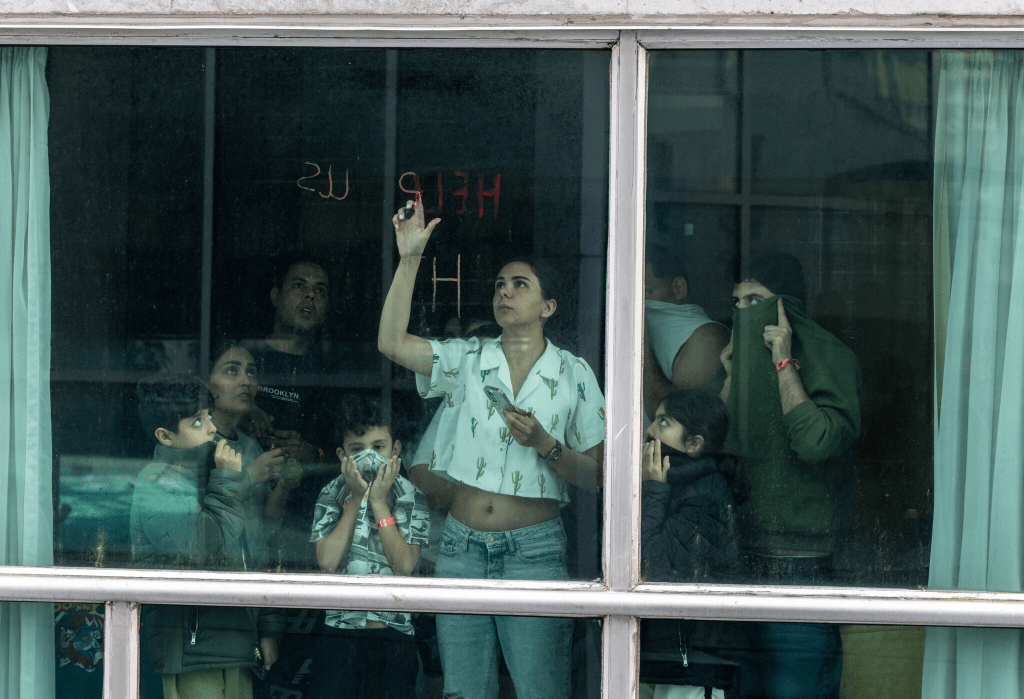
Tell it to the people being dragged off the streets, their children left behind, or, if unlucky enough to be present, zip-tied together in the street while their parents are dragged away. Americans and immigrants are being herded and stripped of their rights–well, except for the white immigrants. We even let one take over parts of the government and have access to all of our information, slicing through safeguards for our citizens, as well as people of other countries.

Tell it to the people who lost their jobs because it’s not important that we take care of other people or even our own citizens. We’ll spend more illegally arresting and deporting the “others”. We won’t worry, until the others are us.

Tell it to the Americans who are losing health care and/or can no longer afford it because we don’t value their health.

Tell it to the children who we refuse to feed or educate properly because we “can’t afford it.”

Tell it to our military who are being used to fight “wars” that don’t exist, at home and abroad, including illegal attacks on fishing vessels. Also, the military doesn’t need to be with their families. We can cut their numbers even more, so they can be spread even thinner.

Tell it to the institutions being renamed and simplified to a fraction of the amazing they once were–and given a multiple felon’s namesake.

Tell it to the people who can’t afford food, electricity…the basics.

See it in the banal vitriol spread by the president, vice-president, unqualified cabinet, and their likenesses, for instance, the head of the civil rights division of the DOJ calling people “hoes”. We’ve sunk to a low, unequaled in the history of intelligent discourse.

The list is long, and this is just a drop in the bucket of the absolute dissolution of American freedoms, not to mention our country’s support of other dictators around the world at the expense of our friends.

We are largely represented in our government by criminals, cowards, and grifters, watching as our country–while never perfect–falls to the hungry leeches of hate and materialism. Our own president (and I refuse to capitalize the titles of people who don’t deserve them) has grossly increased his personal wealth while people continue to praise his brand of fascism, which is, by the way, the same brand as every other wannabe dictator.

Do I have hope? Of course. I believe in the millions who have marched, protested, and refused to stand by. I believe in the organizations and individuals who have stepped in to take care of the men, women, and children, animals, climate, and so on, who have suffered since our unqualified administration has taken office. I believe in the Constitution, and while some courts have unfortunately forgotten their understanding of the law, many have not and fight on today. I also believe at some point, even the clowns who have cowered from living up to the expectations of their elected positions (meaning “for the people”) will finally take a stand and remove this administration from office because otherwise, we will lose.

Look at Nixon’s impeachment–obstruction of justice, abuse of power, and contempt of Congress. Trump managed all of those offenses in his first week, but he’s still here, still robbing America of its freedoms, money, integrity…its soul.

We cannot stand for it.

Federico Rios for The New York Times

“Who Said I Was Ready?”

There’s no such thing as preparation, at least not for your mother’s death. No matter how sick or hurt or even expected, the loss brings an emptiness, a shifting, unlike any prior experience.  It’s difficult to pinpoint the exact feeling, but it’s a spinning, groundless sensation—like you’re numb but still moving.

Some believe when a mother lives to a “ripe, old age” there exists some sort of contentment.  “Well, you’re lucky!  My mother died at __ age.” Maybe in theory, ten years removed, a person could objectively analyze someone’s good fortune at having a mother for longer,  but it’s not a comparable entity.  The hard truth is your mother is irreplaceable.  Put bluntly, “You could set your mother on fire, and she’d still love you.” That’s hard to come by.

My Mom was my home, in so many ways.  Since our military family moved frequently, Wye Lane was more than where I grew up.  Besides memories, it was where I always found love, comfort, familiarity, laughter, and sometimes, banter (Mom and I would disagree at times, but I knew she still loved me…even if she thought she’d messed up somewhere in teaching me).  She had a hug that warmed you—you’d linger just to prolong it, but my favorite was her hands.  They were strong and soft at the same time, giving you something to hold onto (Mom taught us about firm handshakes) but at the same time providing pure gentleness.  As we got older, I only got the chance to experience it when we were in church.  Maybe I should’ve insisted on it.

I could sit with her at the table in the mornings (when she was healthier), and we’d drink our tea while she did the crossword puzzle, only asking for help if she’d exasperated every possible avenue at finding the answer.  I knew as she got sicker, to be quiet in the morning because she didn’t feel well, but soon enough, she’d start talking.  She loved to drive her bills to their destinations, not trusting the mail to do the job.  It made me laugh–and discuss alternatives with her–but the trips were enjoyable, and we usually got lunch while we were out. In the evenings, we’d sit in the recliners watching Blue Bloods or, if you were unlucky that day, a recording of nuns saying the rosary (don’t judge; it was the same one every time).  She’d show you pictures or interesting posts on her iPad, paint beautiful pictures on an art app, or do crossword games.

When she was healthier, she’d come stay with us to take care of the kids, so we could go to a military event.  It was pretty much the only way to get her to visit after Dad passed away.  She’d come off the plane completely nauseous, so I’d have some ginger ale on ice (only Canada Dry, thank you).  I loved to have her there to show her the picturesque places and enjoy her company.  She would’ve loved where we live now—it’s sad she was never well enough to travel here.

Mom could always manage anything and everything.  I remember as a child going to the commissary with her.  She’d figure out the most economical purchases to cover the week’s meals, all the while showing you how to calculate the better deal.  And the coupons!  She’d plan and pack for family trips, coordinate and cook meals at St. John’s, family picnics—you name it…Mom handled it.  One of the times she was watching the kids while we were away, and Pat had his first lacrosse game.  He ended up with a kidney shot, so she took him to the E.R. and then to the store to buy padding (who knew you needed padding; isn’t that something they’d share at practice??).  She never called!  And, because the salesperson “was so nice”, Mom sent her a fruit arrangement.  I couldn’t talk her down from it…

She was sentimental to an extreme, keeping gifts people had given her well past the time when they were useful or prudent.  She’d say, “What if they come over, and I’ve just thrown it away?!”  She was generous with her time, money, talents, and heart. She’d go out of her way to acknowledge kindnesses, and she would let you know if you were being unkind.  She’d leave money in envelopes taped to the inside covers of the trash and recycle bins for the guys emptying them, yet we also tracked a fellow motorist around downtown Charleston because the driver made the mistake of giving Ma the middle finger.  The lady helplessly looked on as Mom let her know she “ought to be ashamed of herself,” and so on:)  I was a bit concerned for our welfare.

Mom experienced and accomplished so many things.  On one of my latest birthday or Mother’s Day cards, I listed the multitude of achievements she had realized.  She said, “It sounds like I’m bragging.”  Of course, I had to point out that I had written the card:)  We moved in the military with two children, and it was quite an adventure at times.  Mom did it with eight and added two for good measure.

I could go on forever, but what will I miss most?  All of it.  I used to call her most nights.  Then, she wasn’t well enough to talk on the phone, so I could only talk if visiting.  Then, she wasn’t feeling well enough to talk while you were there.  It was a progression of loss.  You think it’s best for her if she’s not in pain anymore.  You think you’re somewhat prepared. But you’re not.  When she takes her last breath, you’re shocked and devastated, reeling from the realization that the one who loves you most is gone.

I’m telling you: there’s no preparation.

“You dance secretly inside my heart, where no one else can see.”

Students Are Children, and They Will Act Accordingly: COVID Chronicles Series, Part 2

            This past school year created a challenging environment for student learning.  Most children learn better in a physical school, taking into consideration the support and social systems inherent in a school setting.  Are there exceptions?  Absolutely.  In my experience, however, even the independent students suffered from the realities of online learning.  Many of the complications of this learning mode center on the sheer fact that children are children—and will behave in a manner consistent with their stage of development.

            One the of the first issues to arise during the implementation of the school year involved the diversity of home environments.  Some students enjoyed a parent or two at home who may or may not be working, and some students were left home alone to learn on their own.  Frankly, positive circumstances depended on the student’s personal discipline and the helpful participation of the parent, regardless of whether the parents were home or not.  When left to their own devices, students would often converse with other students (via phone, messenger, etc.), play video games, or watch movies during class, resulting in a lack of attention to the lesson.  When called upon, students did not know where we were in the lesson, often citing “technical difficulties.”  The expectation of attentiveness—something managed in class—diminished due to distractions at home.  Not only class time was wasted; students were not learning.

            Evaluation of student learning was also made difficult.  While testing lessened during the year, the ease of cheating proved to be an unavoidable draw for most students—even the “strong” ones.  Students would take the test together, sharing answers as each worked on different parts of the test.  Students would “google” answers, often copying verbatim from the site (using vocabulary they did not understand, and higher concepts yet to be taught).  Basically, they could have their books, notes, computers, phones, parents, siblings, and neighbors at their fingertips to “help” them complete a test.  On one occasion, I questioned a student on an answer and was told, “I didn’t know we couldn’t google answers.”  Students who were in school were testing on a  normal curve, but online students did extraordinarily well.  This often led to some parents wanting their child to switch to online learning—because they were too “stressed” to come to school.  It is the unusual student who places honesty first when all his or her friends are cheating.  It’s a developmental issue, not a character flaw, and sadly, there are parents who have no problem with cheating; they are more interested in a good grade.

            While I would encourage all parents to teach their child to ask the teacher for help, middle school begins the transition from a parent’s complete involvement in learning to a student’s initiation into self-management, meaning the student takes more responsibility for his or her learning.  The nature of online learning prevents the give and take of informal conversation between the student and teacher, whether before/after class, at recess, in the cafeteria, or before/after school.  While students were given the opportunity to set up individual Zoom calls outside of class, very few would take advantage of the opportunity.  There was not enough class time to talk individually to students (aside from the fact that everyone would be a part of the conversation), so the checks and balances students receive during a normal school year were almost nonexistent. 

            Many more obstacles presented themselves during the past school year, some visible in a limited number of students.  There will always be parents whose children “are better suited for online learning”; however, most students perform more favorably in a school environment because they lack the maturity and development to learn on their own, and many do not have adequate support systems to manage online learning.  Also, the relationship teachers build with the students is just as important, and nothing can compete with seeing them face-to-face. What was the overriding takeaway for 2020-2021?  Students need to be in school.

Quote of the Day: “It’s not what we do with education once in a while that shapes students’ lives. It’s what we do consistently.”

The Rearview: “Things are crazier than they appear.” COVID Chronicles Series, Part 1

Two days after crossing off the last day of school, the feeling has not completely disappeared that the lesson plans, grading, research, and preparation–not to mention posting and parent/student communication—still hang precariously over any other option of activity. The fact that crossing days off a calendar proved necessary for the “light at the end of the tunnel” pretty much says it all. This school year is best viewed in the rearview.

Moving to a new place should have been enough of a change but accepting a teaching position during COVID begs testing.  The red flags were flying high enough and in sufficient numbers to slap away any doubt of impending toils but getting back to the business of teaching proved to be a more formidable draw.  COVID protocols and expectations—numerous and arbitrary, depending on the school—introduced the year, but the varying administrative decisions regarding modes of teaching, class composition, and even the number of class days highlighted the school year’s tragic unfolding. 

The principal determined teachers should teach students in-person and online at the same time.  Forget the fact that most teachers had never taught students online, adding an in-person addition created problems most should have seen coming.  There was also an assumption that technology would cooperate.  New faculty would face new students in a new school with inconsistent technology and faulty equipment.  Try three weeks with a computer and SMART board that did not work, constantly working between a personal computer to keep the virtual students online, while engaging the students in class.  It was not pretty.

Around September, administration decided that the teachers needed a better plan…a hybrid plan.  Classes would be split in half, with each coming into the building only two days a week; the other two days would be asynchronous learning—lessons posted online for students to complete on their own.  This gem of an idea required two classrooms for each subject, meaning ten classes for teachers with five classes.  It also required teachers—if they wanted to have a fighting chance at student understanding—to create videos for the asynchronous lessons.  This required five videos per day, not to mention making sure that classes were kept straight for lesson posting, as the asynchronous days flipped half-week.  In other words, our already double-full-time workload was doubled again.

This is where the work/home balance (a perilous concept in a normal year) took a hit.  Teachers pride themselves on being organized and prepared.  To maintain this standard, this new “system” required working all the time—all day, all evening, all weekend.  To make matters worse, administration decided some of us were “overworked” and should take better care of ourselves.  The fact that administration contributed a substantial burden of this condition was lost on them.   Instead of establishing a supportive community where teachers could focus on creating multiple learning environments during a less-than-favorable year and administration might stand as defenders of teachers’ professional choices, administration seemed resolved to make haphazard decisions based on everything but academics, eliminating consideration of teachers’ welfare and opinions—not to mention others’ perceptions–from every conceivable angle, from parents to students to colleagues.

By March, a “new” plan emerged:  students would all come in person for the remainder of the school year.  Teachers were thrilled; finally, a chance at a normal environment.  Sadly, this concept disappeared as fast as it was relayed.  Students and parents were given the option of remaining virtual.  While the classes were able to return to five, they were in-person and online at the same time.  After the year of ten classes, this was a welcome change, nonetheless.  The year finished more “normal” than before but still without the academic opportunities teachers employ in a regular year.

With the constant changes, we lost a couple of teachers early in the year, but why did most teachers stay?  We persisted because of students and teacher professionalism (although there were moments of thinking, “I’m out of here.”).  The students always suffer or prosper from the determinations of the school, and no child deserves to be abandoned during any year, much less this type of year.  While teachers endure a lack of respect from some, they are professionals who deal with the academic, social, emotional, and psychological needs of all their students.  A typical day involves teaching, mentoring students, recess/lunch duty, parent conferences, parent/student written communication, behavior modifications, and grading.  Teachers also plan parties, complete psychological evaluations, learning evaluations—and have been known to purchase items students need.  Adequately capturing all a teacher’s sense of duty and responsibilities would be a nearly unattainable endeavor.

It is over, and many of us will not return next year.  COVID wreaked havoc on multiple areas of our lives, but it also exposed significant issues in our education system.  These are not revelations to those who deliver the education; we have known about them for some time.

Part 1 of 4 Series

Next:

Part 2:  Students Are Children and They Will Act Accordingly

Quote of the Day: “Every child deserves a champion–an adult who will never give up on them, who understands the power of connection, and insists that they become the best they could possibly be.” Rita Pierson

My Kahuna

I have often wondered how I might sufficiently explain the love of an animal to someone who has never experienced the gift. Believe me, it is a gift–bestowed on the lucky. When an animal loves you and lets you love it back, you are given insights into one of the purest loves there is, one without judgment, jealousy, disappointment, conditions…anything we humans sometimes place on each other. Animals only want your love and attention–and some food, of course–but they return ten-fold what you give. Animals do not remember that you left them for the weekend or fed them three hours late. They don’t hold onto real or imagined slights. They still run to the door when you come home–even when you don’t deserve it. In return, they require extraordinarily little, to be honest, but they give freely. I lost one of mine today, and the damage is palpable.
Quote of the Day: “Until one has loved an animal, a part of one’s soul remains unawakened.” Anatole France

Even a Minute of Breathing…

The watch was a gift, something to not only tell time but track exercise, heart rate, weather, email, even answer the phone.  Some of its features, however, allowed it to establish whether I was sitting too long or, as it turns out, if I might be a little stressed.  The “code” would light up on the face of the watch, letting me know that “even a minute of breathing would reduce stress.”  There are actually a few well-intentioned slights. 

As this year has progressed, my watch seems to alert me more often, bringing into focus the truth that all things are not optimal.  While this alarmed me somewhat, the fact of “getting used to it” rattled me more.  Why is it so commonplace to get used to negative realities?  I guess we condition ourselves to positive actualities, so what’s the difference?

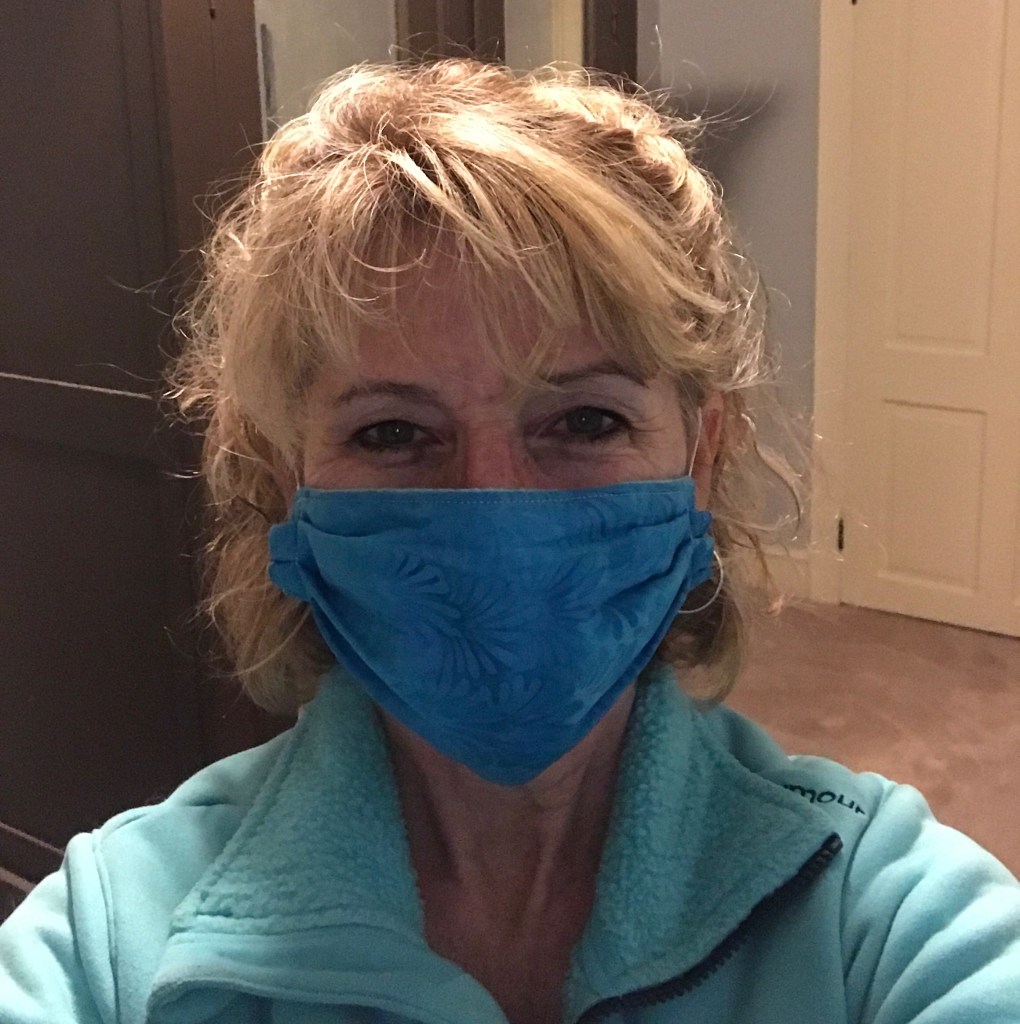
There’s a colossal difference, actually.  I don’t think I’ll ever get used to wearing a mask—even though it is extremely important.  I won’t get used to teaching kids through a computer, or not getting to see friends, or travelling, or really meeting our neighbors, or joking around with complete strangers, or petting random pets, or seeing people’s smiles.  Yet, these realities are, hopefully, short term, necessary evils to lead us into a healthier place.

While this year has adjusted our way of life, the moments of synchronicity are clearer, making them sweeter–spending the afternoon playing corn hole with our daughter, son, and his fiancé’, hiking through the mountains, having the time to read a book of choice…these occasions are a remembrance of hope. Plan for them, put them on a calendar and cross out the ones leading up to these possibilities. Trust me; it makes all the difference.

As this year loosens its grip, and we ease into 2021, hang onto those flashes of joy, concentrating on your upcoming dates…and I hope your Thanksgiving proves to be one of them.

Quote of the Day:

“Joy comes to us in ordinary moments. We risk missing out when we get too busy chasing down extraordinary ones.” Brene Brown

Ethical Behavior

The scents and sounds of summer envelop us.  The warm sun hails the morning—disquieted by the choral sounds of birds, bugs, and slinking lizards—sustaining its simmering glow well into the evening.  Our neighbors toil in their yards, trek the neighborhood, and barbecue on their patios, allowing children to run, jump, and chase across lawns and over fences.  The beginning of the summer months calls the masses…when temperatures entice even the most resolute of gamers out into the sunlight.  It’s so easy to be drawn into this picturesque inauguration of our most active season.

But, please tread lightly. 

While our quarantine left us wanting of interactions, simple shopping jaunts, and seats at our favorite eateries—once commonplace freedoms—yielding to our temptations to throw caution aside can have dire consequences.  The sacrifices we’ve made staying home and the ones our medical and responder communities have made standing guard deserve our vigilance in following and maintaining the guidance put forth by the world’s finest scientists and doctors.  Wear a mask.  Wash your hands often.  Stay six feet apart when outside.   

Going out into the community, I’m amazed at how many ignore these three, simple expectations.  A multitude of reasons exist, yet none warrant the possible detrimental effects to a stranger we pass or someone we love.  We shouldn’t need a personal tragedy to bring home the costs involved.  The 90,000+ people who have died from this virus have family members who mourn them, whether they were young or old.  90,000.  It’s been reported that we’ve surpassed Vietnam War deaths, an unimaginable statistic a short three months ago.

Even though the weeks, at times, seemed to crawl by, and each individual struggled in diverse ways, collectively, we’ve made some stark changes in our thinking and living, positive and negative.  Let it be a decisive metamorphosis, one enabling a collective force for world-wide wellness.  An all-for-one-and-one-for-all mindset.

Pay attention to those qualified to advise us, not your neighbor’s brother’s sister’s aunt😊 The Dr. Faucis and Birxs of the world have spent a lifetime studying, practicing, and advising not just everyday people like us, but the scientific community. Let’s do the right thing…and stay in our lane.

Quote of the Day:

“Ethics is knowing the difference between what you have a right to do and what is right to do.” Potter Stewart

You Need This..or Do You?

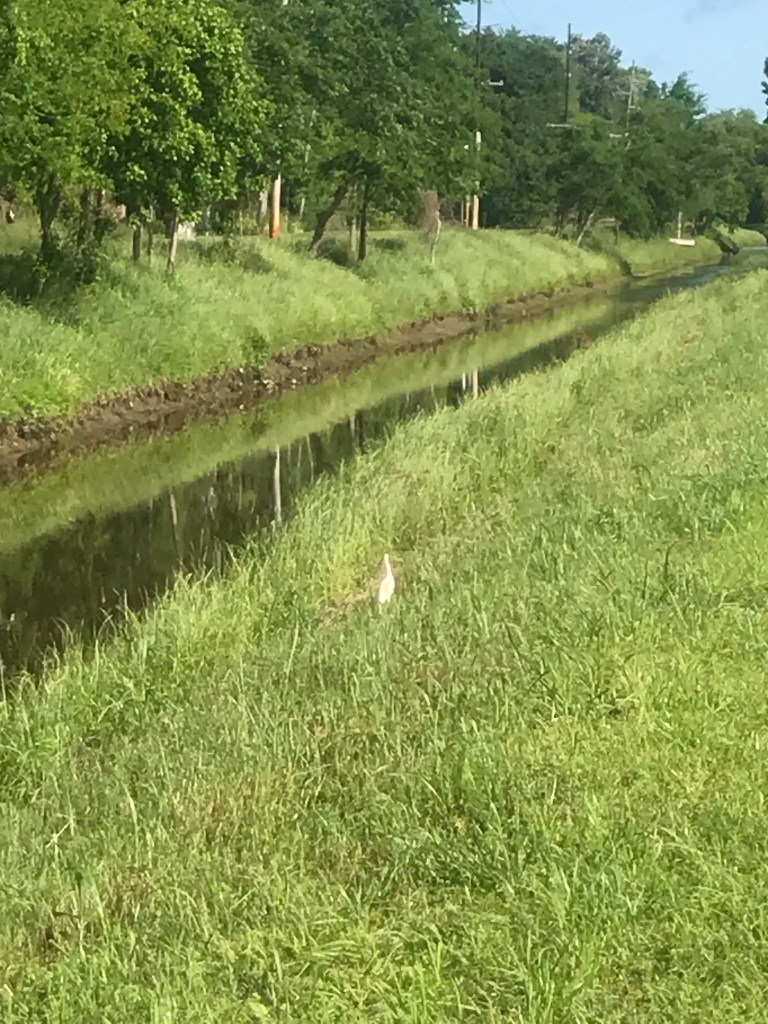
While cycling on the Sawmill Branch Trail the other day, I was taking in my crazy luck at having access to such a beautiful area. The trail is nestled in the town of Summerville, South Carolina, allowing all residents—and non-residents, really—access to a lush, green-lined waterway, parts of which are reminiscent of trails in the Poconos of Pennsylvania, one of my favorite hiking/biking destinations. During this time of year, young herons can be seen padding along the waterway, basking on the sunny banks or low-flying to the other side to escape passersby.

Summerville has always been one of my favorite towns in the area, a quaint city with beautiful parks and a small-town feel, close enough to Charleston to enjoy its positives.    The historic homes flank a downtown area with small businesses, a Saturday farmer’s market, and multiple festivals throughout the year, including a Third Thursday celebration each month.  We purchased our home five years before my husband retired from the military, planning on spending the rest of our days here.

Unfortunately, Summerville has fallen into the age-old trap of not knowing how much is enough.  Whether through poor planning or overly aggressive development, the town has lost sight of what made Summerville charming.  It reminds me of the Joni Mitchell song, “Big Yellow Taxi,” where she sings, “they paved paradise and put up a parking lot.”  There’s much to be heeded in that line.  Summerville is presently considering extending Berlin G. Myers, a highway, through the trail to alleviate traffic.  The town has grown to the extent that traffic, once minimal, has grown exponentially, creating bottlenecks and congestion throughout the area.  Destroying the trail would forever negatively change our town; Summerville has yet to understand when enough is enough.

We all face this dilemma at least once in our lives, usually multiple times.  Is our home big enough?  Should we buy a nicer car?  Are we making enough money?  The list extends about as far as we’re willing to let it.  There’s plenty of bait out there to make us feel like we need more, so being lured into believing we’re lacking is understandable.  The question remains one of complacency—not necessarily with having a substandard choice, but more of a decision based on whether or not the choice will make a more than negligibly positive difference.

When discussing professions with our children, we stressed choosing a career that would give them purpose while making enough money to support themselves.  How much money they required to back their lifestyles was completely dependent on them.  Sometimes, as adults, we forget the valuable advice we dole out😊, choosing to chase the proverbial carrot, even to our detriment.

In times like these, during COVID-19, we’re reminded of how little we really need; we’ve been able to focus more on those things we value…the company of family and friends, leisurely conversations, simple activities done with those we enjoy. Let’s hope this lasts, this consciousness of how much is enough.

Quote of the Day:

I’m too busy working on my own grass to notice if yours is greener.

Watch Your Six

It’s always an immense relief when realizing you haven’t raised a child with a touch of certifiability. Our daughter has driven a red Mustang for the last seven years, since she was in college. When the problems commenced, I can’t say, but for the prior few years, she seemed a bit irritated (softened adjective) when she was driving, particularly when she was in rush hour. At times, she appeared more interested in the actions of the cars around her than any conversation we were having—yeah, I know, she should have been, but I’m talking about being at almost a standstill.

I worried for her, wondering if maybe she should move closer to work to lower the stress involved in the long drive. Maybe she was under more stress than we realized? Maybe there are an inordinate amount of questionables driving in Charleston? Maybe she shouldn’t drive?

I should mention that she is an excellent driver, not one to use the power her engine is definitely capable of…well, unless there’s an emergency, of course. You see, she totaled her car about two weeks after getting her license, a simple mistake of taking a graveled onramp too fast. The next thing she knew, she was going backwards onto an interstate with a speed limit of 75. It was scary for all involved, particularly her parents! All were fine—luckily, an off-duty police officer was driving the car that approached her as she came onto the interstate, and she deftly hit our daughter’s back panel to throw her off the highway. It still scares me as I write this.

Back to the intense “irritation” with other drivers…we just didn’t get it. Until last Sunday, Mother’s Day, when she came to the house to spend the day with me. Unfortunately, her car broke down about half a mile from the house. Long story, long, we set up having her car towed to a repair place for the following day, enjoyed our afternoon, and she took my car home. The next day, the mechanic said he’d bring her car back to me the following day—wonderful, right??

The next day, the car was returned as promised, and I awaited my car; however, I needed to pick something up from the store, so I took the Mustang.  NEVER have I EVER been so rudely treated in a car!  You would’ve thought that I had a target on my back bumper.  People wouldn’t let me change lanes, they were cutting me off, they were challenging me as they came along side of the car.  I was shocked.  Basically, the red Mustang says something very different to those who view it than intended by our daughter.  I couldn’t believe it.  Honestly, I wouldn’t drive the car; that kind of attention would make me crazy, not to mention seeing the worst in some people.

When I told our daughter, she was vindicated!  It was too funny.  She only said, “I told you!  People are nuts!”–which only made me laugh harder. 

So, consider this my personal public service announcement. Take it easy on the sports cars! Think of the driver as your daughter, son, wife, husband, mother, father…whatever works for you. In our case, it’s a young women who’d be the one to stop and help you on the road. Let her in.

Quote of the Day:

People will never truly understand something until it happens to them.