Knowing Who You Are

My husband and I were on a trip recently, and we found ourselves sitting in the hotel bar, the result of acquiring two free drinks from the concierge because of a mix-up with our reservation.  At the time, what we didn’t immediately realize was we were staying in a hotel with, shall we say, reasonably affluent guests.  Our eureka moment presented itself after we’d ordered and looked around. 

As with any such moment, you’re generally caught unaware, obliviously meandering through an assumed normal moment.  We sat down at the bar because the tables were full and waited patiently for the bartender to acknowledge our existence.  He was perfectly kind—don’t get me wrong—but there remained the slight hesitation, I’m sure, when he got a good look at us.  It still makes me laugh!  After we ordered our drinks, we started taking in the scenery.

To our left was a group of gentlemen in suits with an obvious leader seated among them who the bartender frequently ministered to, topping off drinks, filling snack bowls, etc…we wondered if he’d adopt us for the evening.  An assorted menagerie of patrons was on our right, thank God.  People were dressed well, but all-in-all, we felt a little better about the comparison, kind of.  Then, we became aware of how we fit in, or really didn’t fit in.

I wore what could be described as outdoor wear, something you’d find on the slopes, really…cold gear shirt, thermal pants, snow boots to my knees.  And, no, there was no snow.  My husband wore jeans and a golf shirt—mind you, the golf shirt had a logo, while a great company, made our “predicament” even more funny.  I won’t go into it!  Let’s just say, we realized, after laughing hysterically, we belonged more in an Irish pub—or any pub, for that matter, than in the type of establishment in which we found ourselves.

To say we were a bit uncomfortable would be an understatement.  I found it amusing that two people who normally feel pretty relaxed in who they are could suddenly get ruffled because of an outfit.  But, there you have it.  Awkward is awkward.

We could analyze the whole situation, breaking it down, piece by piece, to understand why we felt out of place, but really, it’s pretty simple. We’re pub people. We can dress up and fit in if we have to, but we’d rather put on a pair of jeans and hang out in the relaxed atmosphere of a pub. We knew that, but the experience still made for comic relief. By the way, our favorite so far? Cork’s Sine’—people show up to play music, and you get to drink a beer and listen. Doesn’t get any better.

Knowing what you like really makes life easier—and more enjoyable. In our case? Less expensive as well😊

Quote of the Day:

“It takes courage to grow up and become who you really are.” e.e.cummings

“The Definition of Insanity”

“Learn from your mistakes” remains a mantra-like saying, touted in one form or the other throughout the world from the time we are able to communicate until the day we die, yet, even as adults, this common idea bypasses our hippocampus, sometimes daily.  It’s not the moments when we forget where we put our keys because we don’t put them back where they belong, or even eating the slice of everything pizza, knowing it’ll almost certainly lead to stomach upset.  What’s downright frustrating is our ability to “forget” the more dire consequences that befall our lives when we choose to ignore past experiences.

Take running. As an exercise, it has always been an enjoyment of mine.  I first ran around the neighborhood or with family and friends.  Then, I progressed to running 5K races and 10K races.  Great, right?  Well, it was fun…until my sister and I decided to run a marathon.  We did all the proper build up, running short runs during the week and a long run on the weekend.  Sweating in the South Carolina summer heat as we ticked off the miles would, for some, be a badge of honor.  For me, it was utter dread.  I despised running long distances; every morning that I had to wake up early to start in the “cool” part of the day, I cursed and moaned.  While I enjoyed being a part of the race with my sister, my knee—injured a few weeks before—hurt almost the entire race.  We even ran a half marathon after that—I guess to prove to myself I really didn’t want to do it again.  So, why do I find myself running a half marathon twenty plus years later?  I have yet to learn from my mistakes!   I still hate running long; there’s nothing enjoyable about it for me–or my hips, knees, ankles, or feet.  Plus, now I have more reason to be apprehensive about waking up early on a balmy, humid Summerville day—a 53-year-old body already experienced in torture.

What about speaking with caution? Have you ever kicked yourself for sharing information with someone who you didn’t really know well enough?  You know, the “I’m going to share this with you, but please keep it to yourself,” conversation.  I’m not talking about gossip, either.  Whether it’s a lapse in judgment when giving a co-worker an insight or sharing a struggle with someone, losing trust in someone you thought was on the up-and-up can be devastating in different ways.  Sadly, when someone tells you a conversation will stay between the two of you and then he or she proceeds to do the complete opposite in less time than it takes to order pizza, your belief in humanity takes a hit.  You believed the assurances, knowing either professional courtesy or human kindness would protect you.

While these examples are benign in the scheme of things, the realization as I grow older and “wiser” is the fact that sometimes history repeats itself, no matter how hard we try to avoid the tentacles of certain events.  Sometimes, we walk into it completely aware of the mistake, thinking we may possibly be immune this time.  Other times, our guts cry out in horror, yet we move forward believing it an overreaction—surely, it’ll be different this time.  Still other times—depending on our memories—we completely forget we screwed this up once before, and we willingly embrace our “new” mistake.  No matter the reason, we journey through another parallel pilgrimage, berating our ignorance and promising to never again make the same error. 

At the very least, these homages-to-the-human-condition should bring understanding of the young people around us making their blunders for the first time, as well as the rest of the population making their own mistakes—sometimes on the same page as our snafus.  I wish I could say that I’m done with it.  I’m not running long distance ever again after this race.  I’m not sharing information with people I’m unsure of.  I’m listening to the voice in my head or my gut or heeding the signs of impending disaster.  But, I’ve said all of this before.  I’ll probably be here again.

It’s funny, really. And human.

Quote of the Day:

“Don’t let the fear of what could happen make nothing happen.”  Extramadness.com

Remembering Our Base

Soon, we will vote for some of the leaders of our country; whether at the local, state, or national level, our determinations will affect long-lasting change.  With that being said, who do we want to lead?  Who do we want to make decisions for our country and, by extension, our personal well-being?

Everyone, for the most part, champions a leader.  We grow up, cognizant of those who exemplified goodness—basically people who did the right thing.  From our parents to teachers to coaches, we gleaned respectable traits, behaviors, and attitudes in keeping with the “right” way to live.  We looked up to those who made a point of living their lives with integrity, and as we grew up, we learned to differentiate the truly honorable from their counterparts.

In our professional lives, we look for the same characteristics we valued throughout our lives—the person willing to not only stand for what is right, but willing to take responsibility when things go wrong.  In other words, we still look for leaders.  But, what constitutes a good leader?  Google this query, and you find Sarmad Hasam’s top ten qualities—most would agree his list captures the highlights.

  • Honesty and integrity
  • Confidence
  • Inspires others
  • Commitment and passion
  • Good communicator
  • Decision-making capabilities
  • Accountability
  • Delegation and empowerment
  • Creativity and innovation
  • Empathy

We can all expound on those in our own lives who epitomized uprightness; I have quite a few. Luckily for me, my parents taught hard work, honesty, and owning your own mistakes. Mr. Peeples, who managed the Winn-Dixie I worked in as a teenager, treated all respectfully, working around our school and activity schedules. Paul and Terry Padron, my gymnastics coaches, made patience, hard work, and kindness simply routine. Mrs. DeLucco, my first school principal, led the entire school staff in placing understanding, people, and learning at the forefront of education. My husband, Sam, worked tirelessly for 33 years in the Air Force, putting people and the mission first. These leaders understood motivation, care, and respect.

I’ll tell you that I’m concerned about our elections—we probably all are, or should be.  It seems we’ve lowered the bar for our elected officials on the very basic attributes we expect from the leaders in our everyday lives.  A principal of a school would be fired for the behaviors shown by some of our elected leaders.   We make excuses for outcomes which are personally beneficial, regardless of how they affect other citizens of our country.  It is not the time for selfishness and division; we need to elevate our offices to the stature and responsibility they command, placing people of intelligence, integrity, and empathy. 

When November rolls around, vote for candidates who demonstrate the characteristics on Mr. Hasam’s list, those caring for all of the citizens of our great country. The hard truth is that when we decide to accept lower standards for our leaders, inevitably we design our own ruin.

Quote:

“The further a society drifts from the truth, the more it will hate those who speak it.”  George Orwell

Required Learning

Nothing evokes impatient dread like a “required reading” component of a class, conference, or job, even for avid readers. Maybe it’s the idea of personal choice, past insufferable reading, or a combination of both, but when the situation presented itself recently, I procrastinated for as long as possible (that can be the subject of another blog). Having another person regard the book negatively didn’t help either.

When I finally resigned myself to begin the arduous task of reading it—on a plane, no less—I was pleasantly surprised.  The author/researcher/professor/psychologist who wrote it tackled the psychology of happiness, including the elements of our own happiness we have control over and those we don’t.  On the surface, it’d be easy to scoff at the notion there’s a psychiatry to happiness; however, as Dr. Martin Seligman, in Authentic Happiness points out, why would studying the science of happiness be any different than studying the science of depression?  The hope of preventing, rather than overcoming, depression seems a more advantageous pursuit.  Mesmerizing!  I believe I’ll read on.

Which leads me to share a practice initiated by a student of Dr. Seligman in his Positive Psychology class called “Gratitude Night.”  The point of the exercise involved bringing a person to class who was integral to the student’s life and who had not been properly thanked.  Students prepared—over several weeks—a statement explaining the person’s significance to his or her life.  When the unsuspecting person came to the class, the student delivered the speech.  Everyone in the room experienced a shared, giving moment, none more than the student and honoree.  As Seligman would share, Gratitude Night became the most memorable day of the semester.

We all have people throughout our lives who enable us to be better.  For these college students to not only have the chance to thank their patrons, but learn the practice at a young age begs duplication.  The act doesn’t have to be a public one, though.  Seligman describes a suitable exercise for all of his readers:

“Select one important person from your past who has made a major, positive difference in your life and to whom you have never fully expressed your thanks (Do not confound this selection with newfound romantic love or with the possibility of future gain).  Write a testimonial just long enough to cover one laminated page.  Take your time composing this; my students and I found ourselves taking several weeks, composing on buses and as we fell asleep at night.  Invite that person to your home or travel to that person’s home.  It is important that you do this face to face, not in writing or on the phone.  Do not tell the person the purpose of the visit in advance:  as simple “I just want to see you” will suffice.  Wine and cheese (the event for the class included these) won’t matter, but bring a laminated version of your testimonial as a gift.  When all settles down, read your testimonial slowly, with expression, and with eye contact.  Then, let the other person react unhurriedly.  Reminisce together about the concrete events that made this person so important to you.  (If you are so moved, please do send me a copy at seligman@psych.upenn.edu).”

While all of us don’t particularly enjoy writing, the opportunity to thank those who took a chance on us, or showed us the way, or just treated us with grace seems one worth taking.  The beauty of writing, anyway, remains in its heartfelt sincerity; the length of the words or complexity of form is of little consequence.  This exercise requires only that—a true understanding and appreciation of the person you’re thanking.

When I taught high school seniors to write thank you cards, I’d tell them to pretend the addressee was sitting next to them, and they’re having a comfortable conversation, sharing how they’d used the gift or what it enabled them to do.  If needed, write the note out on another piece of paper, making sure to get the tone intended.  The whole point is to allow the receiver to feel your gratitude.  Such a simple gesture, thanking someone, yet the experience proves joyful for both parties.

I haven’t finished reading Seligman’s book, but I will—and I wouldn’t hesitate to recommend it. Who doesn’t want to be happier?

Quote:

“What we see depends mainly on what we look for.”  John Lubbock

Be Thankful, but Vigilant

Twice this week, different people reminded me of the abundant freedoms afforded in our country and the many ways our citizens enjoy these freedoms. Ironically, both were immigrants to the United States, people who came to America and were able to compare the state of their own countries to the practices and policies here. At first, I was somewhat embarrassed at how we were characterized, basically, a spoiled people who have no clue of the conditions under which others live. In some ways, they’re absolutely on target, but not completely.

Do we forget what we have at times? I believe so. Should we be thankful for the freedoms we have available to us? You bet, at least for those of us who are able to benefit from them. The problem, sometimes, is not all are privy to the same freedoms, and the ability of those who do profit to advocate for those who don’t demonstrates the actual purpose of our freedoms. In other words, we’re not above improvements in our society, regardless of how well we’re doing compared to other communities.

Can you imagine if throughout the history of America, no one believed we could be better? So many advancements would never have occurred–abolishing slavery, due process and equal protection, the right to vote for all citizens, desegregation, lawful inter-racial marriage, pregnancy discrimination, Americans with Disabilities Act, Family and Medical Leave Act, and rights of same sex couples–and these only touch on civil rights. The argument could be made for any progress, whether medical, technological, and scientific, for example.

Working towards an equal playing field for all of our citizens to improvements in our standard of living constitute the very characteristics of a civilized society. This isn’t a promotion of mindless dissatisfaction or entitlement; it begs more of basic humanity. So, while listening to and throughly understanding the sentiments of those who have traveled from more difficult circumstances, we can’t undermine our dedication to the rectification of past and present flaws and misinterpretations. Our forward movement can only insure our country’s future hope of greatness.

Quote of the Day

“The enemy is fear. We think it is hate, but it is fear.” Gandhi

Take a Seat

Nothing kicks your behind more than being sick. You’re going along, doing the things you need to do to maintain some semblance of a healthy life, and the next thing you know, you’ve exchanged your active existence for a seemingly permanent place on the couch. As someone who thrives on activity, I can tell you it’s both physically and mentally debilitating, even the most positive outlook takes a hit…in various forms.

It’s bad enough that you’re feeling under the weather, but all things on your list get pushed further and further to the back burner, whether it’s work, communication, commitments, even housework. God forbid you had a trip planned–having to sit at home while others still go, or just thinking about what you’ve missed tries the most pragmatic minds. These mental acrobatics can take their own toll on your well-being. They tend to be anxiety producing, at least.

You’re not your best self; that’s probably the hardest realization. Your accomplishments aside, your head is not in an optimal place, meaning you’re irritable, at times, and passive about things you’d normally concentrate on. Even if you feel like you should worry about a particular task or person, you just don’t have the energy or ability to act on it. If you’re alone, these feelings can be compounded.

I’d venture that anyone going through something–positive or negative–benefits greatly from sharing it with others. I know there are those who say they’d rather be alone when they’re sick, but I’d speculate that it would apply to certain, short-term illnesses. Even if only to break up an otherwise Groundhog Day-like afternoon, having someone sit with you goes a long way towards hopeful mental health. I’ve certainly been guilty of the “let me know if you need anything” response. In this day of texting and Facebooking our sentiments, there’s something to be said for good, old showing up. It’s not easy, to be sure, but worthwhile for both parties.

Last, but not least, let’s not forget about caregivers. If it’s a long-term illness, the person(s) responsible for taking care of someone suffer as well, sometimes needing as much consideration as the one who is ill. Check in on them–physically, as well. Sometimes, it’s when you’re sitting for a while with someone that they finally feel comfortable enough to share with you their needs, if only as a listener.

Our lives have become busier and busier, and not necessarily in a good way. We don’t often know our neighbors–least of all not well enough to know when they’re struggling. This isn’t a “Call the Midwife”, television-painted society, unfortunately, where the community keeps tabs on each other, making sure they’re doing their best to care for those who need extra attention. But, even if it’s one person in our lives–family, friend, neighbor, or stranger–that we can reach out to, it’d make a much-appreciated dent in one person’s misery.

Quote of the Day

“The human touch is that little snippet of physical affection that brings comfort, support, and kindness. It doesn’t take much from the one who gives it, but can make a huge difference in the one who receives it.” Mya Robarts

Sportsmanship is a Must

Many of us watched the men’s Wimbledon final, a masterful tennis clinic hosted by Roger Federer and Novak Djokovic. Two athletes at the top of their game battled it out in five sets to determine who was the best on this day. As someone who doesn’t watch tennis frequently, I became aware, through the commentators’ conversations, of Federer’s popularity over Djokovic; it seems Djokovic desires the same love from tennis fans that Federer garners. While I understand the tendency to prefer one athlete over another (the fans cheering harder at times for one), the fans at Wimbledon quieted for serves and were quieted if they yelled beyond an acceptable time. Respect for the players and fans was expected because there’s no place in sports for bad sportsmanship.

We’ve all witnessed bad sportsmanship, from parents and fans yelling at kids (sometimes even their own) and officials during youth sports to fans throwing debris onto sporting areas during college and professional sports. It’s nothing short of the shameful side of some of the most rewarding and character-building opportunities our children and we can experience. At a time when our kids and young adults learn how to work together, survive under pressure, control their emotions, and look at the big picture, they witness adults setting an opposite standard. I’ve witnessed parents drinking alcohol at a high school game, berating officials and players alike. Recently, parents were on the news fighting on the field at a youth ballgame–seriously? In what situation–other than an attack–would that be warranted?

Yet, there is always the majority, like most fans at Wimbledon, the ones who clap hard for the player or team they’re rooting for, keeping the sideline coaching and officiating–and derogatory comments–to themselves. These individuals are the ones who must listen to inappropriate remarks, sometimes about their own children. The ones who aren’t caught up in the idea that winning, while attractive, does not involve a lack of decorum, always trying to remember not only who is watching, but making the most of the experience. They are the ones who must stand up to those who think sporting events are occasions for poor behavior.

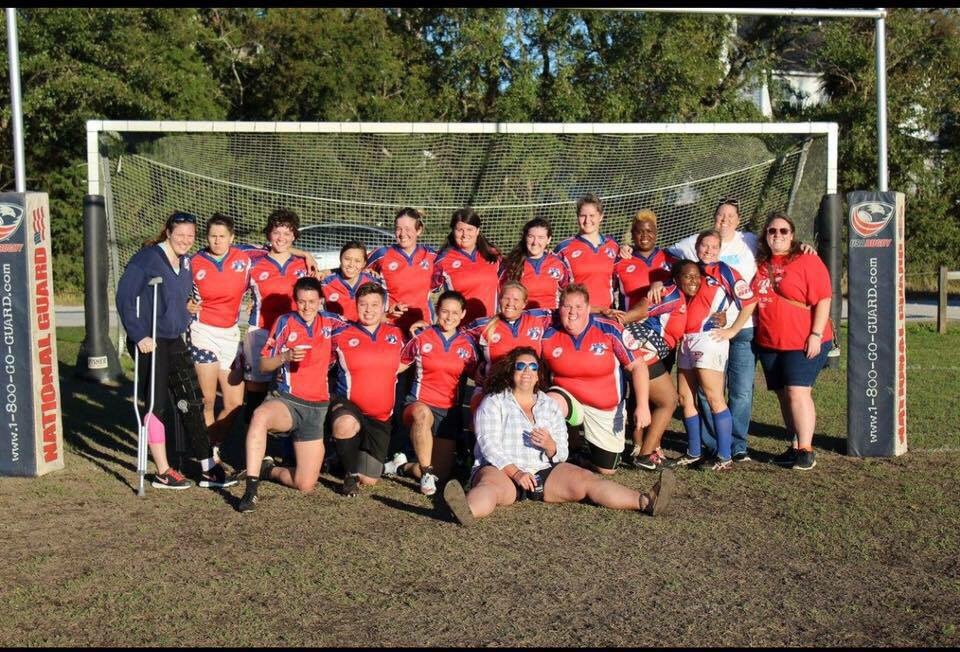
Promoting good sportsmanship can be difficult; everyone has his or her own idea of what is appropriate. Remembering the beauty of sports brings it all into focus, the reason for maintaining a sense of good-natured enjoyment. Appreciate the skills, drive, dedication, and joy of the athletes, as well as our fortuitous opportunity to watch. Enjoy the game! (Like these ladies😁)

Quote of the Day

“Rudeness is the weak person’s imitation of strength.” Eric Hoffer

Beach Beliefs

I would count down the days as soon as we got to the beach, savoring each day and dreading when it would all come to an end. Waking up in the morning, I’d think, “We’ve got five left; still a lot of time.” By the end of the week, I’d lament the last 24 hours, gathering shells, driftwood, or any small piece of our surroundings that could somehow keep me tethered to our stay. While packing our belongings back into our cars, I’d go from room to room, now empty, imagining all of us still set up, fighting tears that I’d probably feel silly explaining.

Our family’s annual beach week started when I was little, first at Kiawah, then at Isle of Palms, and finally at Folly. We’d all pile in a few cars with clothes, beach gear, and food for the entire week ( thank you, Mom), heading to a week of sand digging, body surfing, exploring, game playing, eating, drinking, and laughing. It was a time for all of us to be together, unencumbered by the demands and diversions of everyday life.

We’d eat breakfast, hang out at the beach, come back for lunch, spend the rest of the day at the beach, and then retreat to the house for dinner and games. The days and nights stretched before us, an uninterrupted dance of activity; sleep wasn’t high on our list. We packed both adventure and relaxation into every day–and, sometimes heated debate:)

We still return to the beach (for a time, it was to the mountains), coming together to build on family relationships, catch up on each other’s lives, and enjoy the company of the people who love you no matter what. This year, we had some family staying, some visiting, friends coming and going–the usual moments of calm backdropped against frenzied action. It proved, again, to be a joyful respite from our typical existence.

Our stay ended today, the countdown still a part of my waking routine. I didn’t collect shells or mementos to remind me, just memories. I did, however, go from room to room, taking in the barrenness that was once a full, lively cacophony of our family. Truth be told, I held back tears…because they’d be hard to explain.

Quote of the Day:

‘The secret to having it all is realizing you already do.”

Take Care of Your Head

I experienced one of the most difficult reads of my life, one born of imagined nightmares and parental fear. If you haven’t read “What Made Maddy Run,” by Kate Fagan, you absolutely must. Aside from Fagan’s heartfelt analysis and shared personal introspection, Maddy’s story enlightens an often buried illness, an affliction encompassed in unwarranted shame and misunderstanding–mental issues.

Maddy, an 18 year-old college freshman and athlete, suffers a relentless and bewildering mental change as she attempts to navigate her first year of college, unable to trust the strategies that helped her become an academic and athletic standout in high school. Even if you’ve never suffered from any form of mental illness–depression or anxiety, for example–you’d be hard-pressed to lack the empathy and compassion required to comprehend the overwhelming predicament Maddy faced. Many–our youth included–face struggles for which they’re unable to seek help because of the societal pressure to be okay all of the time. To be strong. To be self-sufficient.

If Maddy had a complication with her heart, or lungs, kidneys, or joints, even, she would easily decide to make a doctor’s appointment, searching for the necessary diagnosis and remedy. The brain, unfortunately, is both problematic to diagnose and steeped in negative connotation when an issue presents itself. Maddy sought help as best as she could, telling–in vague terms–her worry that she was not “right.”

For reasons I can’t comprehend, the most fascinating organ in our bodies–the brain–seems to garner unfathomable criticism when it comes to illness and disease. Why is treating the brain any different than treating any other part of your body? Can you imagine anyone suggesting an asthma sufferer not use an inhaler, or someone recovering from a torn ACL to forgo surgery or physical therapy? The same understanding and protocols for other internal and external bodily injury should be applied to changes in mental function. The brain is as important–more so, actually–as any other organ in your body.

We have to shift our thinking in our view of mental illness, shedding the idea that treating our brains in any way differs from treating any other part of our bodies. All of us experience depression at some point in our lives. The thought that we’re on our own, with no recourse, should our symptoms become unmanageable, compounds those symptoms at best. Consider the countless we’ve lost: Kate Spade, Robin Williams, those, like Maddy Hollerman, who don’t make national headlines. How many should suffer for our ignorance?

And should you need help, To Write Love On Her Arms is a nonprofit movement dedicated to presenting hope and finding help for people struggling with depression, addiction, self-injury, and suicide. It exists to encourage, inform, and inspire, and also to invest directly into treatment and recovery. http://www.twloha.com. Crisis text line offers free 24/7 support for people in crisis. Within the U.S., simply send a text to 741741. A trained crisis counselor receives the text and responds quickly. http://www.crisistextline.org (Fagan, 303).

The National Suicide Prevention Lifeline is, of course, available 24/7 as well. 1-800-273 TALK (8255).

Quote of the Day

“There’s no difference between my brain not being able to produce the correct levels of serotonin, and my pancreas not being able to make the right amounts of insulin.” Paul Cayer

Mistakes are Normal

Had a conversation recently about a young person who had a minor transgression off campus. The student was punished through local law enforcement, but the university wanted to wreak its own disciplinary action as well. Consequences make perfect sense (as well as rehabilitative options), but how many times should we punish our young people–the ones whose brains haven’t fully developed?

Okay, I realize some offenses–rape or murder, for instance–demand elevated repercussions, but in today’s hyper-informational/social media-infused reality, are we giving our kids the opportunity to grow and learn from their mistakes…like we did.

Too many times. That’s how often I’ve been witness to our youth paying for their mistakes–small errors in judgement–for far too long. Some are penalized well into their futures because their punishment(s) prohibit taking advantage of opportunities.

My go-to when trying to understand motivation or procedure is “What’s the goal here?” Are we inflicting these consequences for an error, or are we shutting down any chance of redemption? If it’s recovery we’re after, then we can’t shut the door on the ability of our youth to make amends and flourish.

“Back in the day,” the younger generation made mistakes, paid for them, and moved on. They weren’t defined by one lapse in judgement.

Remember what it was like to be young. Remember the insecurity, the overwhelming thoughts, the stupidity. We all walked the same road.

Quote of the Day:

“Be who you needed when you were younger”